Priests of Prosperity: How Central Bankers Transformed the Postcommunist World by Juliet Johnson
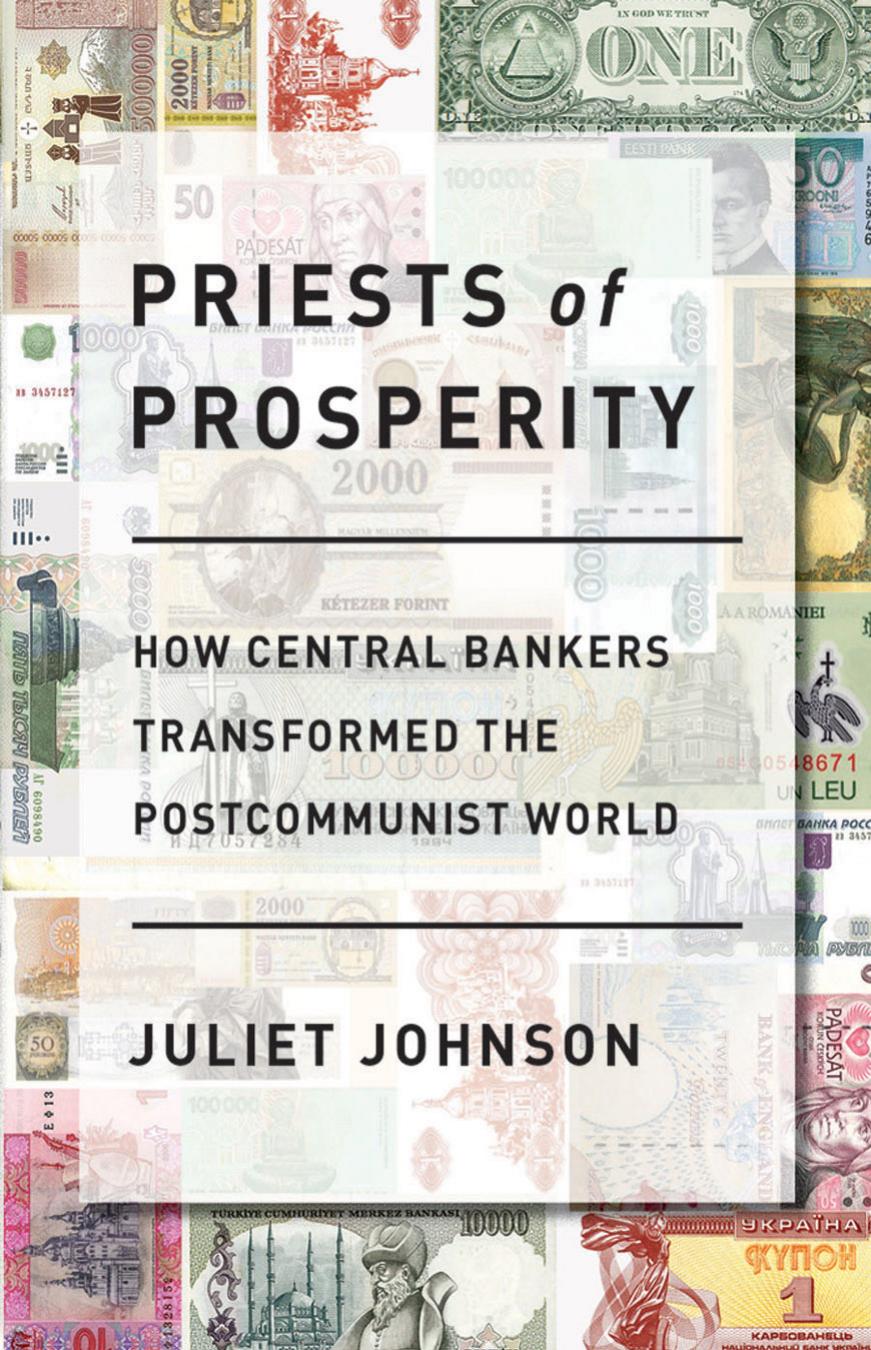
Author:Juliet Johnson [Johnson, Juliet]
Language: eng
Format: epub, pdf
Tags: Communism; Post-Communism & Socialism, Globalization, Banks & Banking, Political Ideologies, Political Science, Business & Economics
ISBN: 9781501703751
Google: IbhIDwAAQBAJ
Publisher: Cornell University Press
Published: 2016-02-25T12:52:27+00:00
TABLE 5.2 Citation patterns in CNB working papers
While the CNB absorbed international ideas and practices like a sponge, the NBS received even more intensive and basic technical assistance and training. As Governor Marián Jusko observed in retrospect:
We had no monetary department, no banking supervision department, and no reserves management department ⦠we had to build whole new departments from scratch ⦠we lacked any credibility ⦠We got help from a few central banks and from a number of international financial institutionsâthe IMF, the BIS, the World Bank, and the European Bank for Reconstruction and Development. We sent our young people to special seminars organized by these institutions and they sent advisors to the bank ⦠I have to thank the international financial community for their help.75
The IMFâs Monetary and Exchange Affairs Department sent its first technical assistance mission to the new NBS in December 1992, before the official breakup of Czechoslovakia. This comprehensive mission team included three MAE officials (including the director), four West European central bankers, and a West European banking supervisor. PHARE and EBRD representatives accompanied the mission as well.76 The mission entitled its comprehensive report simply âSlovak Republic: Development of the National Bank of Slovakia.â The mission gave advice on all aspects of forming the NBS, including central banking law, monetary policy, statistics, foreign exchange operations, and banking supervision. This advice went into great detail, providing specific plans of action with suggested completion dates for development tasks in several areas. The mission also proposed extensive long-term cooperation with the NBS through a resident representative as well as expert visits and further IMF missions on more specific topics. All of my interviewees at the NBS stressed the vital role that the IMF and central bankers from Austria, Finland, Germany, the United Kingdom, and France, among others, played in getting the new institution off the ground and running smoothly.
Similarly, the NBS had to train its new staff in the fundamentals of central banking. From 1993 through 1996, NBS staff took part 8,760 times in 1,362 training courses in Slovakia and abroadâan average of about eight courses for each NBS employee.77 One central banker hired in July 1993 said that the NBS sent âalmost everybodyâ in the monetary policy department to the JVI to take introductory crash courses in macro and microeconomics.78 New staff also attended many basic courses at the CCBS, the Banque de France, the National Bank of Belgium, and the Banca dâItalia. In addition, with assistance from organizations such as USAID (through KPMG Peat Marwick), the US Treasury, and PHARE, the NBS set up an Institute of Banking Education.79 In the words of the NBS director of human resources:
The Institute of Banking Education ⦠cooperates with the most important institutes of banking education in developed countries and plays an intermediary role in spreading modern and effective banking products to both employees of the NBS and to other Slovak banking and financial institutions ⦠we try to make information from the banking sector accessible to our employees
Download
Priests of Prosperity: How Central Bankers Transformed the Postcommunist World by Juliet Johnson.pdf
This site does not store any files on its server. We only index and link to content provided by other sites. Please contact the content providers to delete copyright contents if any and email us, we'll remove relevant links or contents immediately.
The Secret History by Donna Tartt(19086)
The Social Justice Warrior Handbook by Lisa De Pasquale(12190)
Thirteen Reasons Why by Jay Asher(8909)
This Is How You Lose Her by Junot Diaz(6886)
Weapons of Math Destruction by Cathy O'Neil(6279)
Zero to One by Peter Thiel(5801)
Beartown by Fredrik Backman(5754)
The Myth of the Strong Leader by Archie Brown(5507)
The Fire Next Time by James Baldwin(5442)
How Democracies Die by Steven Levitsky & Daniel Ziblatt(5218)
Promise Me, Dad by Joe Biden(5153)
Stone's Rules by Roger Stone(5087)
A Higher Loyalty: Truth, Lies, and Leadership by James Comey(4960)
100 Deadly Skills by Clint Emerson(4925)
Rise and Kill First by Ronen Bergman(4788)
Secrecy World by Jake Bernstein(4752)
The David Icke Guide to the Global Conspiracy (and how to end it) by David Icke(4717)
The Farm by Tom Rob Smith(4507)
The Doomsday Machine by Daniel Ellsberg(4490)
